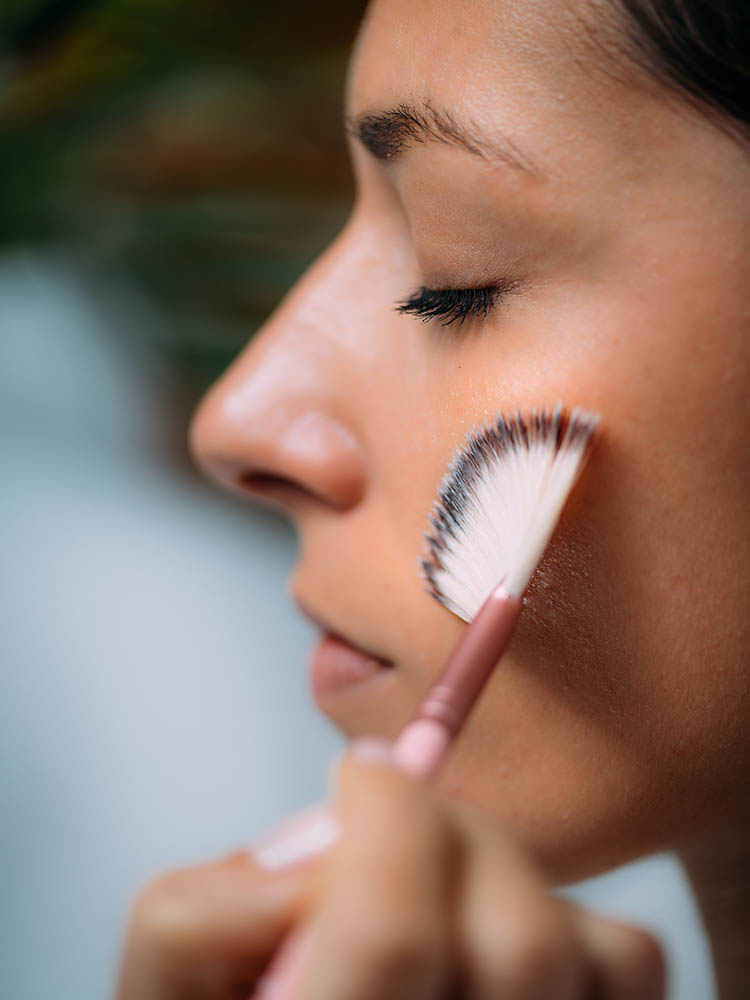

non-surgical procedure
Injections.
Fillers & Peels
Procedure overview
Non-surgical procedures are usually performed to enhance and improve the appearance of skin and include frown lines on the forehead, wrinkles on the face, smile lines, around eyes and lips, fuller lips, improving defects and keloid or scar treatments.
Botulinum toxin
Botulinum toxin type A, better known as BOTOX®, is a product used in aesthetic surgery to correct annoying expression lines in the face. The correction occurs because botulinum toxin temporarily paralyses the muscles responsible for these lines. This allows the skin to recover from years of squinting and frowning. Since the early 1990s, botulinum toxin has been used to treat disorders such as exaggerated blinking, facial spasms, and muscle contractions, affecting partly paralysed patients. These applications have provided sufficient experience to know the product well. It is perfectly safe so long as it is used properly. The aesthetic effects of botulinum toxin were discovered over a decade ago. Since then, it has also been successfully used for this purpose.
Ten to thirty minutes.
None of the topical anaesthetic creams is needed.
Outpatient.
Immediately after Botulinum toxin treatment, only the small pinpricks are visible. Light bruising may occur. Some patients experience a slight headache during the first week.
There are no permanent risks in healthy individuals. Asymmetry can occur but can be corrected with small touch up injections. Drooping of the eyelid can occur in one to five per cent; it always recovers spontaneously within three to four weeks. Myasthenia Gravis is a contraindication.
The effect only arises after three to four days and lasts for two to six months (on average 3 to 4 months). When treatment is not repeated, the original movement always comes back spontaneously.
Correction of expression wrinkles, which improves with repetition of the Botulinum toxin treatment. The patient will notice a more relaxed facial expression with fewer lines and wrinkles.

Fillers
Fillers replace volume under the skin to fill wrinkles or enhance facial features. Soft tissue fillers, also called dermal fillers, facial fillers, or simply "fillers", are used to fill up defects in the soft tissues, typically wrinkles, folds and dents in the face. Some fillers are intended to add volume, for example to the cheekbone or the chin and are often used for lip enhancement. Fillers are injected directly into the area to be treated, often after application of a topical anaesthetic cream. The effect is immediate, and lasts between two to 18 months, depending on the type of product and the treated area.
Fillers take ten to twenty minutes.
Usually topical anaesthetic cream, sometimes a local anaesthetic injection.
Outpatient.
Possible side effects include transient swelling (mainly when used in the lips), redness, tenderness, and bruising. Application of a cold compress after treatment can minimise these side effects.
There is widespread consensus that, although they may seem appealing, permanent fillers are not to be recommended lightly as they sometimes induce adverse reactions which are very difficult if not impossible to treat without surgery. A non-permanent filler will slowly resorb over time and thus need to be repeated; however, they are far less likely to cause permanently visible lumps or late reactions that may occur with permanent fillers. For all fillers, risks include irregularities or lumpiness, over- or under-correction, asymmetry and infection.
If present, swelling and redness usually settle after 24 to 48 hours. Most patients can go back to their activities immediately with some make-up.
Filler treatments provide volume and enhance facial features as well as either partially or entirely correcting wrinkles and folds. Although results vary between individuals, Non-permanent fillers may last up to twelve months before needing to be repeated.

Chemical peels
Chemical peels improve the appearance and texture of the skin. Chemical peels are safe, reliable and effective skin treatments aimed at improving skin texture, skin discolouration, hyperpigmentation, acne and scarring. Chemical peels restore wrinkled, blemished, unevenly pigmented, or sun-damaged facial skin, using a chemical solution to peel away the skin’s top layers. A chemical peel involves the controlled application of a low pH solution to the skin, which penetrates and lifts the upper layers of dead or damaged skin cells. This stimulates the production of collagen and elastin which work to create a fresh, rejuvenated skin surface. This procedure works best on fair, thin skin with superficial wrinkles. Different types of chemical peels exist, distinguished by their strength and the depth to which they penetrate (superficial, medium or deep).
The procedure takes approximately one hour for regional areas and two hours for the full face.
Topical anaesthetic or sedation combined with local anaesthesia may be used. When sedation is given frequently, EKG monitoring is used.
Usually, this is an outpatient procedure. A full-face phenol peel may require hospital admission for a short period.
- Phenol and TCA peels:
These chemical peels can cause temporary throbbing, tingling, swelling, redness and acute sensitivity to the sun. - Phenol peel:
These chemical peels may cause permanent lightening of treated skin and permanent loss of the ability to tan.
- Phenol and TCA peels:
Tiny whiteheads (temporary), infection, scarring, a flare-up of skin allergies and cold sores, excessive temporary skin pigmentation. - Phenol peel:
Abnormal colour changes (which may be permanent) and heart irregularities (these are extremely rare and occur during the procedure).
- Phenol chemical peels:
The formation of new skin takes seven to twenty-one days. The patient may resume normal activities in two to four weeks. Full healing and fading of redness may take three to six months. - TCA peels:
New skin forms within five to ten days. The redness will fade over several weeks.
- Phenol peels:
These chemical peels are permanent, although new wrinkles may form as skin ages. - TCA peels:
Results after TCA chemical peels vary, and the effect is temporary.